


Welcome to the fifth edition of the 2026 season of Drift Signal. As a reminder, this is a newsletter that examines macro and markets through the lens of late-cycle investment theory.
Before we jump into today’s edition, I am delighted to share that I have recently joined Vsquared Ventures as Head of Research. Vsquared is a European deep tech venture capital firm, founded in Munich and operating across the continent, that backs what we call the “New Industrials”—companies combining breakthrough science with next-generation software and physical systems manufactured at scale: batteries, chips, robots, satellites, and more. The firm thinks in systems, across technology risk, capital structure, industrial policy, and sovereign strategy. That combination is rare, and it is precisely where I want to be working as the late cycle unfolds.
I will continue to publish Drift Signal, and the views expressed here remain my own. The synergies with my work at Vsquared are obvious—late-cycle investment theory is, in many ways, a framework for understanding exactly the industrial and energy transitions that Vsquared backs—but this newsletter remains an independent voice.
A small format adjustment: From this edition onward, the header will carry a brief note on what I am working on, along with links to recent publications worth your time. Today I want to point you to two pieces I published with Marieke Flament for our joint newsletter Currency of Power:
How Much Does a Higgendorfus Weigh? is a conversation with Michael Green, Chief Strategist at Simplify, on gold, Bitcoin’s fatal contradictions, passive investing, and why tokenisation is a genuine revolution that has nothing to do with crypto.
The Tokenized Money Stack maps how America, China, the UK, and the EU are each building a different piece of the future monetary architecture—and each blind to the layers it most urgently needs.
Now, in today’s edition, I will examine the war in Iran, its impact on global markets, and its possible consequences through a late-cycle lens.
A brief disclaimer: I write this letter for investors, mainly in tech, but with a wider macro perspective. The market and economic effects of the conflict are what concern me here. I will not address the nature of the Iranian regime, the political or religious disputes tied to the conflict, the relationship between the US and Israel, or broader questions of religion, politics, and influence. Those topics sit outside the scope of this publication.
My aim here is straightforward. As I argued throughout last year’s editions, we are living through the modern equivalent of the 1970s. What happened in that decade offers the clearest available guide to what may unfold in the coming years across Europe, America, China, and the wider world.

1/ History is rhyming again
On the surface, the US attack on Iran looks like a show of strength, or an attempt at one. Through the lens of my late-cycle investment theory, however, it looks like something else: a mature paradigm leader under stress, reaching for military force because its economic tools are running out.
It is hard for all of us economic history wonks not to make the parallel with 1979. That year, the Iranian revolution and the foundation of the Islamic Republic struck a global economy already weakened by stalled productivity, rising debt, and the collapse of the Bretton Woods system. Oil prices doubled, then doubled again. The result was stagflation—inflation and unemployment rising together, defying every conventional remedy. US President Jimmy Carter paid the political price and badly lost his reelection bid, to Republican Ronald Reagan.
Today a similar pattern is assembling, piece by piece. The recent US attack on Iran has disrupted the world’s most sensitive energy corridor. Insurers have pulled cover on supertankers transiting the region. Oil above $90 a barrel is adding inflationary pressure to an economy already strained by tariffs, a softening labour market, and the electricity demands of the AI buildout. In America, February payrolls fell by 92,000, with unemployment having risen to 4.4%. Healthcare and social services accounted for the entirety of recent job gains; every other sector contracted.
Unlike in the 1970s, the Federal Reserve cannot act. With US debt at 122% of GDP and annual debt service approaching $1 trillion, the Volcker option—massively raising interest rates to crush inflation—would trigger a sovereign debt crisis before it brought prices under control. The Fed is paralysed.
This edition argues that the attack on Iran is not an isolated event. It is a late-cycle shock landing on a late-cycle economy—and the consequences will follow the same logic as 1979, albeit with some important differences which investors and decision-makers should keep in mind.

2/ The late-cycle framework points to what comes next
To understand why the attack on Iran matters beyond the immediate headlines, we once again need to revisit Carlota Perez’s model of technological revolutions.
As Carlota wrote in her landmark Technological Revolutions and Financial Capital, every 50 to 70 years, a new techno-economic paradigm follows a predictable arc: a period of chaotic installation, a financial bubble, a phase of broad productive deployment, and finally maturity.
In the maturity phase, the fog of uncertainty lifts. Markets saturate. Productivity gains slow. The institutions built around the paradigm begin to crack under the weight of accumulated imbalances. We are in that final phase now, for the age of semiconductors, computing, and networks.
This is what my late-cycle investment theory means by our living “the 1970s of tech.” In the 1970s, the previous paradigm—the age of oil, automobiles, and mass production—exhausted its underlying productivity gains. Growth stalled. Debt rose. Institutions built for earlier eras stopped delivering. Then several exogenous shocks arrived, including one in the form of the Iranian revolution, and a system already under pressure broke and was gradually replaced by something else entirely.
The structure today is identical. Enormous AI investment is driving electricity costs higher without yet producing broad productivity gains. Public debt sits at levels that remove the standard monetary response. Global supply chains are fragmenting. Institutional coordination is failing.
When a shock arrives in a late-cycle economy, it finds a system already primed to amplify it. Our being in the late cycle not only explains the consequences, it also explains the decision itself. The same institutional decay that makes the system fragile makes reckless decisions more likely. A leader orders a strike without a plan, without congressional authorisation, without apparent concern for the aftermath, and genuinely believes it will work out. The decay is self-reinforcing: it produces both the action and the steep bill that follows.
The 1970s ended one order and opened another. The same transition is now underway—and the country best positioned to lead in the future might not be the one doing the bombing.

3/ The United States has misread Iran before
The attack on Iran did not arrive without precedent. The US has a long record of misreading this country at precisely the moments that matter most.
In the late 1970s, the Carter administration backed the Shah long after his position had become untenable, maintained almost no contact with the opposition, and then—when his fall became inevitable—convinced itself that Khomeini was a manageable transitional figure. Carter’s UN ambassador called him a “saint”. His ambassador to Tehran compared him to Gandhi.
The Carter administration, after all, officially promoted human rights as a cornerstone of America’s foreign policy—and by that point, the Shah’s regime had come to represent the opposite. (And as Sarah Paine noted in a Dwarkesh podcast on the Cold War, Carter’s global promotion of human rights also contributed, indirectly, to the collapse of the Soviet Union.)
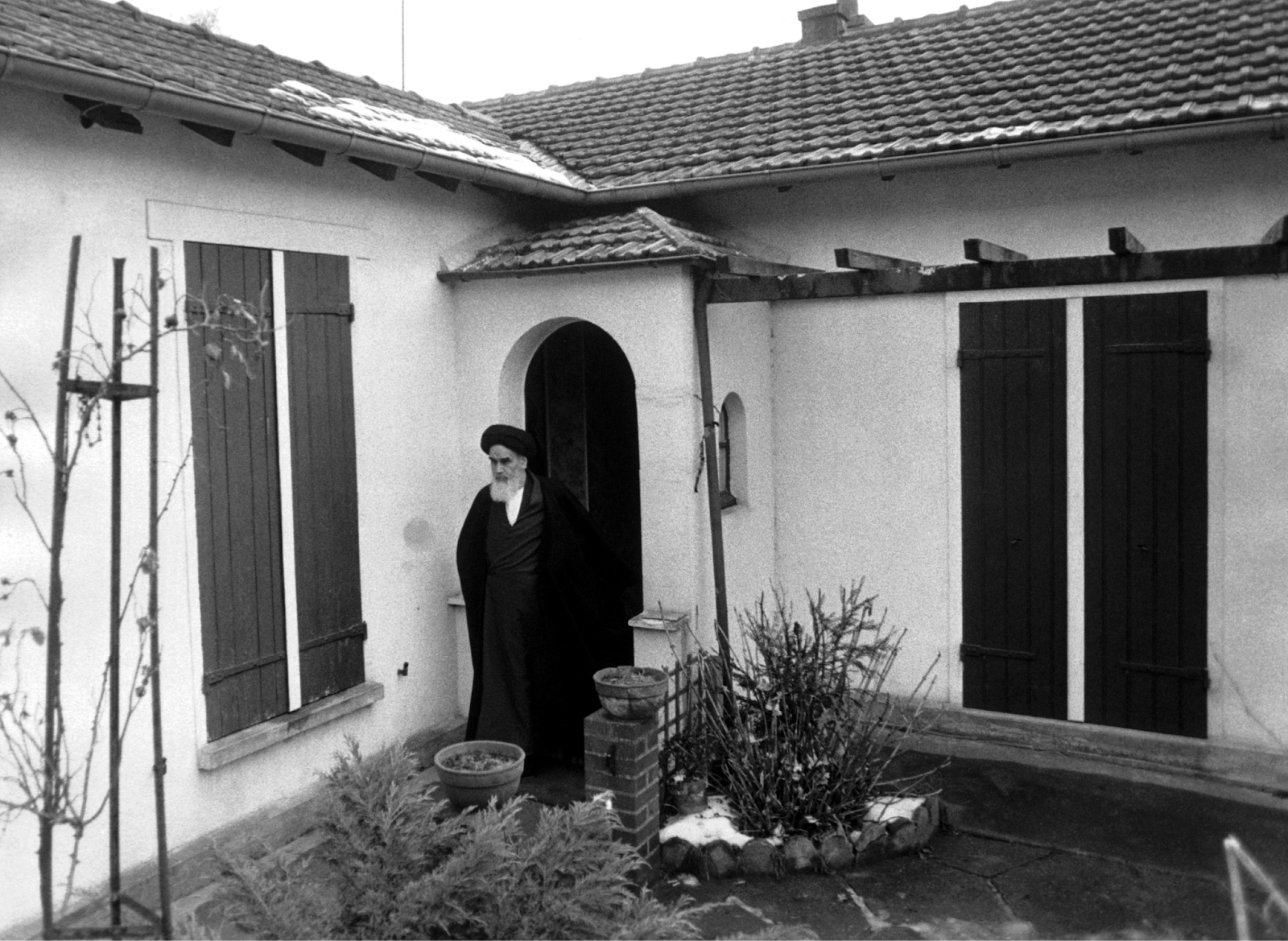
The French dimension adds another layer. Khomeini spent 112 days in Neauphle-le-Château, a village west of Paris, between October 1978 and February 1979. He arrived there by elimination: deported from Iraq by Saddam Hussein under pressure from the Shah, refused entry by Kuwait, he landed in France because it was the one country an Iranian could enter without a visa.
President Giscard d’Estaing then permitted him to stay, against the advice of his own intelligence services, calculating (as did others in the West) that political Islam would serve as a counterweight to Soviet influence and that French commercial contracts—including deals with Airbus and Thomson—would be protected. From that modest house, Khomeini recorded the speeches that were copied onto cassettes and smuggled into Iran. And so the Iran revolution was partly organised from a small village in the Perche, a rural, quiet, and picturesque region of France where many Parisians keep their country homes.
As we know now, none of this went according to plan. Within a year, the senior Iranian military had been executed and American diplomats were being held hostage in Tehran. Carter never recovered. His failure to read the Iranian revolution correctly, and then to manage its consequences, handed Reagan the presidency and reshaped American politics for a generation.
The current administration shows the same pattern of strategic blindness, in a different register. The Trump strikes on Iran appear driven more by domestic political pressure than by any coherent strategic calculus. There doesn’t seem to be a plan beyond the bombing itself. Bruno Maçães wrote about it in a recent edition of his newsletter World Builders: Trump loves the spectacle of decisive strength but has no appetite for the consequences of genuine political action in the real world.
The recent strikes on Iran have underscored how asymmetric modern warfare really is, with low‑cost drones, missiles, and proxy actions forcing expensive, high‑tech defences to respond and shifting the battlefield beyond traditional fronts. US operations depend on expensive, high-value assets—F-15s at $97 million each, Patriot interceptors in limited supply. Iran fights with drones that cost $25,000. The economics favour Iran, which just has to wait it out, over America.
More generally, political leaders caught in a late cycle such as ours share a tendency to mistake military reach for strategic clarity. Carter paid for that mistake with his presidency. But the story did not end there. Reagan course-corrected, Volcker finally broke inflation, and the US went on to reap the rewards of a prolonged maturity phase for three more decades, in addition to taking the lead in the next technological revolution—that is, the age of semiconductors, computing and networks.
Put differently, late cycles produce crises, but they also create the conditions for what comes next. The question today is whether the recovery—when it arrives—will accelerate the race toward the next paradigm or, as in the 1970s, merely add more coins to the machine, prolonging the current techno-economic paradigm by a few decades with temporary expedients.

4/ Iran’s nuclear programme began as a French commercial deal
Before asking what comes next, it is worth asking how Iran acquired the capabilities now under attack. The answer, as it were, runs through Paris—not Pyongyang, Moscow, or Beijing.